How can a region’s image be transformed? How can it highlight its strengths, attract new residents and visitors, while supporting its urban transformation?
Since late January, students at the
Master's Degree in Public Information, Communication, and Media (ICPM) Students from the Institute of Communication and Media (UFR LLASIC) atUniversité Grenoble Alpes this very real challenge as part of a career-oriented project conducted in partnership with Grenoble Alpes Métropole. Their mission: to conceptualize an event and develop a communication strategy for the inauguration of the future greenway connecting Grenoble to Séchilienne via Vizille, scheduled to open in spring 2027. The project is designed to serve as a catalyst for revitalizing Vizille and initiating a lasting transformation of its image.
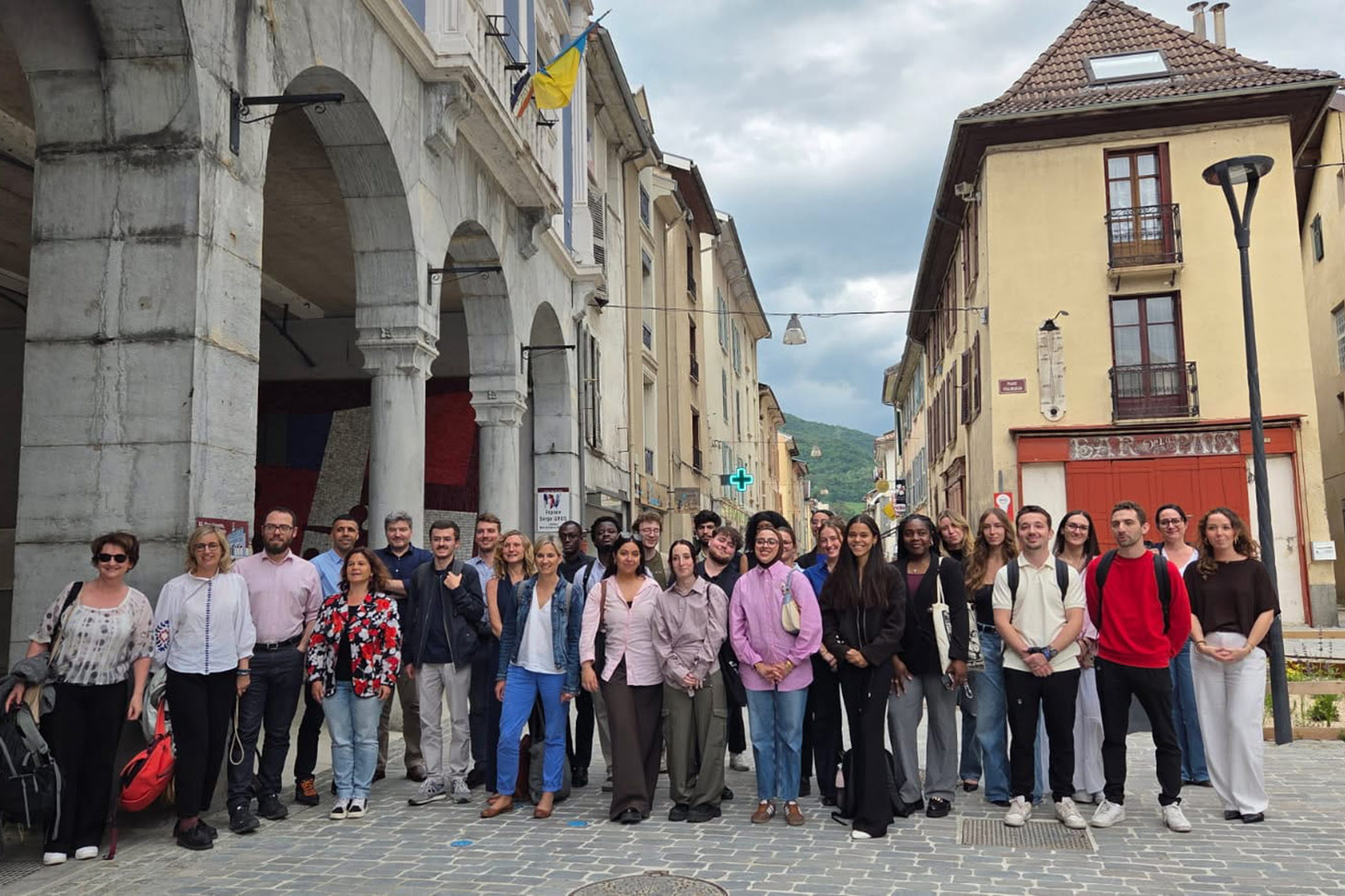
On April 30, the students presented their recommendations during a presentation held at Vizille City Hall, attended by elected officials, representatives from Grenoble Alpes Métropole, and faculty fromUniversité Grenoble Alpes. The jury selected the student agency Alp’Echo as the winner for its vibrant and unifying event proposal.
A hands-on immersion in the field of public communications
For the past four years, the UGA’s ICPM master’s program has been developing an educational partnership with Grenoble Alpes Métropole to expose students to real-world challenges.
This year, the class worked on a real-world project centered on a major strategic challenge: supporting the revitalization of Vizille and helping to transform its image.
Over the course of three months, the students carried out a comprehensive project: regional analysis, surveys, assessment, strategic recommendations, creation of communication materials, and a final presentation to the client. It was a true immersion in the realities of public communication.
According to Viviane Clavier, professor of information and communication sciences and academic director of the ICPM Master’s program:
“Working on a communications project with a client such as Grenoble Alpes Métropole is a particularly valuable learning experience for students in the ICPM Master’s program. It allows them to tackle real-world challenges rooted in regional and institutional issues, while developing practical skills that can be directly applied in the professional world.”
The same is true for Karine Pho, associate professor and project leader, who serves as the academic director of the Master’s 1 program in Corporate Communication:
“The goal of preparing our Master’s students for the professional world is of paramount importance. This project places them in a situation where they must respond to a commission, working on real public service projects that promote our regions, in collaboration with professionals from local governments. This experience is truly transformative for the students from an educational standpoint, as it allows them to apply their knowledge in practice. It is also a transformative personal experience because the competitive, team-based project stimulates their commitment and pushes them to draw on their personal resources, while also confronting the diversity inherent in group work.”
Envisioning Vizille’s Future Appeal
Located south of the Grenoble metropolitan area, Vizille has many attractions: extensive public facilities, a remarkable heritage site—the Vizille Departmental Estate—a well-preserved natural environment, and significant potential for tourism.
But the municipality also faces several challenges: a decline in its appeal as a place to live, economic vulnerabilities, an aging population, and a sometimes tarnished image.
In this context, Grenoble Alpes Métropole is carrying out a major urban renewal program to revitalize the region.
The opening of the future greenway thus represents a strategic opportunity to better connect Vizille to the metropolitan area, develop local tourism, and showcase the town’s attractions.
The students were tasked with designing:
- an event concept centered on the opening of the greenway;
- a communication strategy before and during the inauguration;
- practical communication tools;
- a broader consideration of the region’s appeal.
Digital campaigns, visual identity, event materials, editorial content, innovative initiatives: each group presented its own strategic vision.
A memorable experience for students and partners
For the students, this project was much more than just an academic exercise.
Mélisande Akomo shares her story:
“This project can be described as the culmination of our training. It combines local public communication, an introduction to research, and a creative component through the development of communication materials. I was really interested in exploring what creates a sense of belonging to a place. As a newcomer to Grenoble, this resonated with me deeply.”
Fatima Akrim also explains:
“This project particularly interested me because it allowed me to work directly on revitalizing a region like Vizille by highlighting existing activities that were not yet widely known. I also learned a great deal about how to develop a coherent regional communication strategy that aligns with the public’s expectations and the challenges of enhancing the region’s appeal.”
Grenoble Alpes Métropole has also welcomed the partnership. According to Cécile Branthomme, director of Vizille’s urban planning and development department:
“Working with students means being willing to think outside the box. This collaboration has given me a fresh and creative perspective on our urban challenges, with concrete and inspiring proposals.”
She also highlights the collaborative aspect of the project:
“The students worked in a project-based format, just like in an agency, with true professional rigor while maintaining their freshness and boldness. Seeing how proud they were to contribute to a ‘real-world’ project was extremely rewarding. It proves that these collaborations are meaningful for everyone involved.”
Training the public communicators of tomorrow
Through this type of project,Université Grenoble Alpes its commitment to offering programs that are grounded in professional realities and the challenges facing the region.
For students, it’s a hands-on immersion in their future profession. For local governments, it’s an opportunity to gain a fresh perspective. And for Vizille, it’s already the first step toward a new strategy to boost its appeal.
A concrete demonstration of the university’s ability to train dedicated professionals while contributing to regional development.